To address food insecurity, we must first understand it from a community-level.
Food insecurity exists in every county in the United States, including the 16 counties in southwestern Wisconsin supported by Second Harvest Foodbank of Southern Wisconsin.
The term “food insecurity” is used to describe a lack of access to enough food at a household level, and it is often linked to multiple factors that lead to food insecurity, also known as root causes. The term “hunger” generally refers to a feeling of physical discomfort caused by a lack of food at an individual level. It’s common that these terms are interchanged but used to convey the same intent.
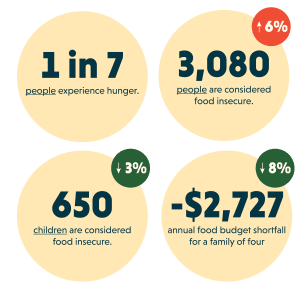
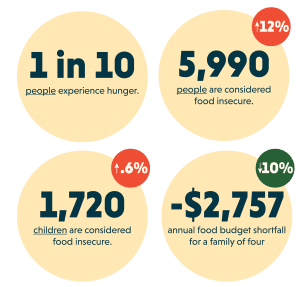
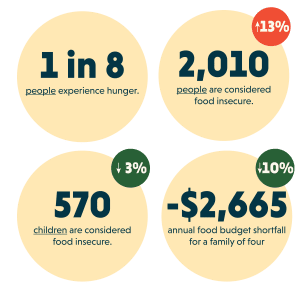
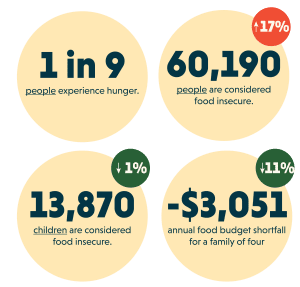
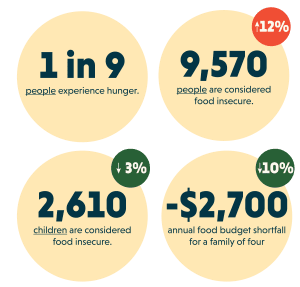
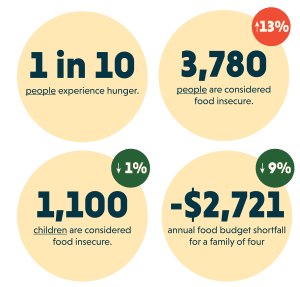
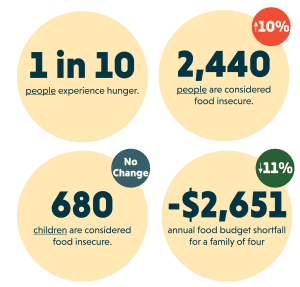
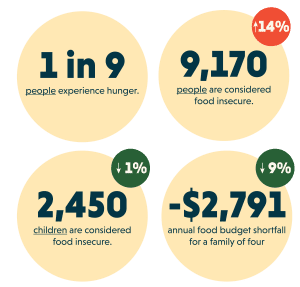
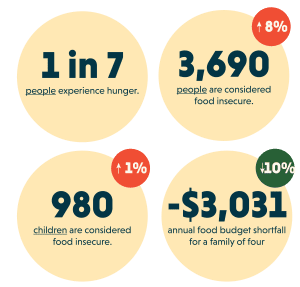
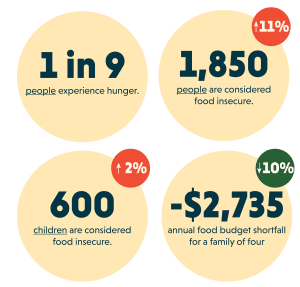
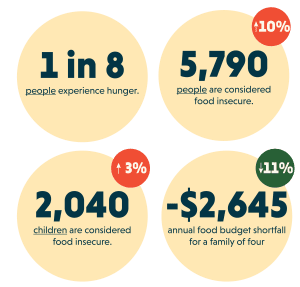
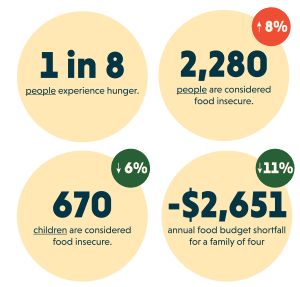
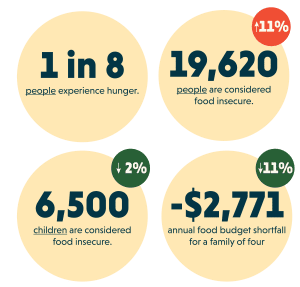
Regardless of how you describe it, when someone doesn’t have access to enough nutritious food, they are unable to live their lives to their fullest potential. This data provides a glimpse at how many families struggle with food access in southwestern Wisconsin.
Hunger can affect people from all walks of life. But hunger doesn’t affect everyone the same—some groups like children, communities of color, rural communities, women, and people with disabilities face hunger at a much higher rate. In our 16-county service area:
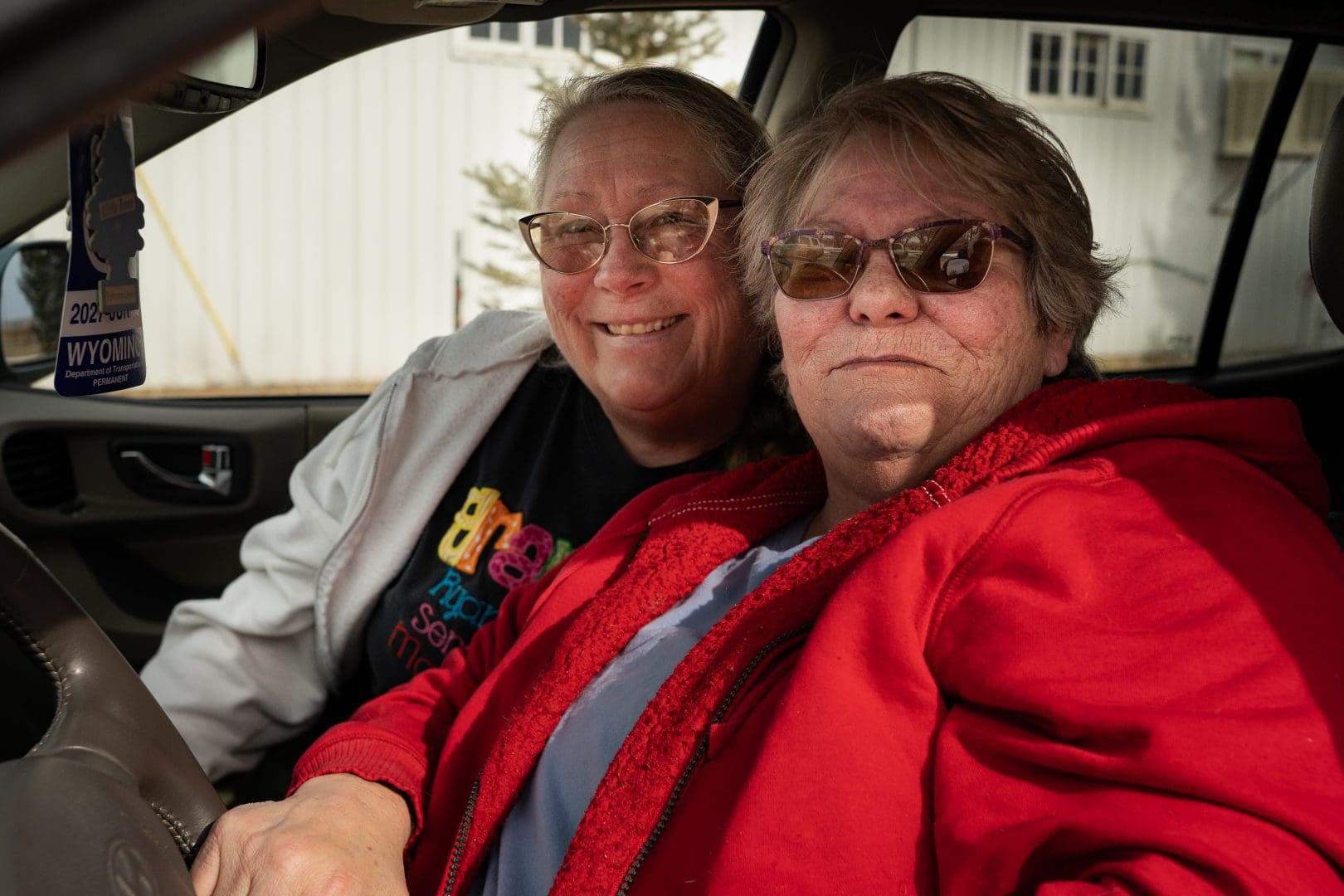
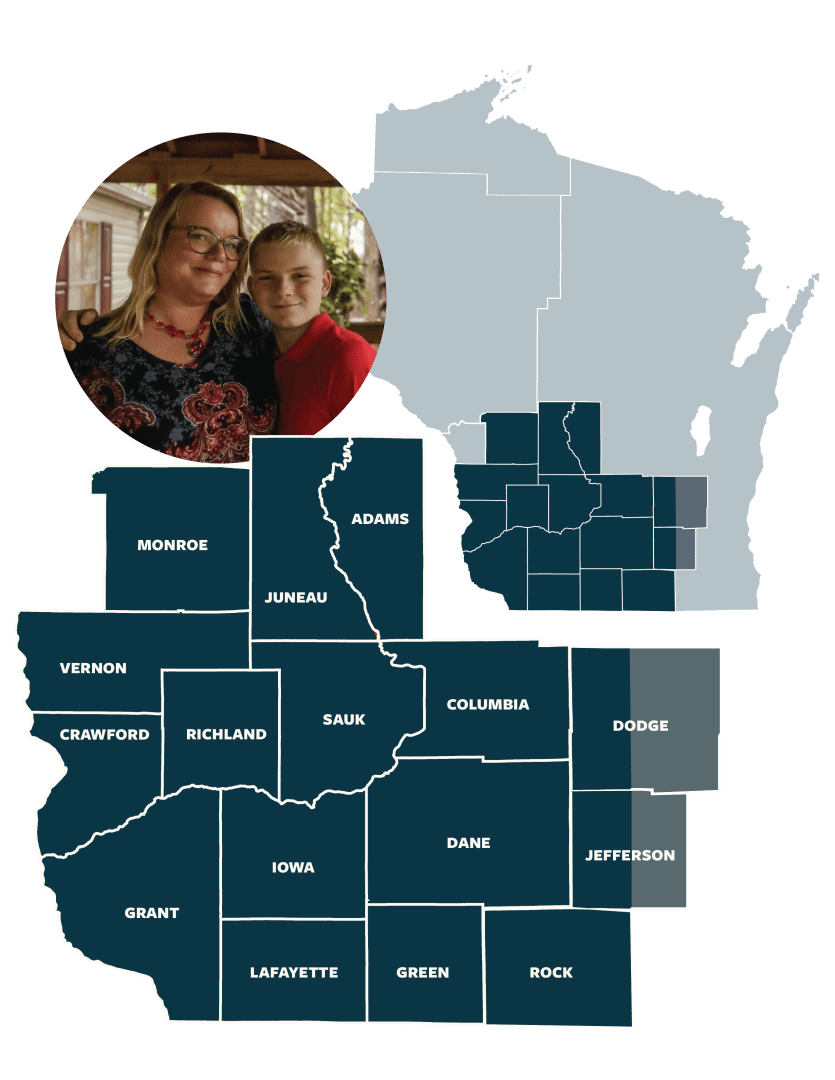
Hunger in our 16 counties
At Second Harvest Foodbank of Southern Wisconsin, we believe that everyone deserves access to enough nutritious food to thrive. Every day— along with our network of local food providers— we work to support nutrition security and food equity for everyone in southwestern Wisconsin.
By leveraging this data, we can make more informed decisions and take meaningful action toward our mission of ending hunger in southwestern Wisconsin.

Explore hunger data in your county
Click on a county to explore unique hunger statistics. Then, download the county-specific fact sheet to which contains hunger data and how we’re working to address it.







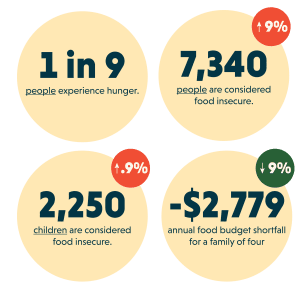

About This Data
Every year, Feeding America conducts the Map the Meal Gap study to learn more about food insecurity at the local level. To accurately estimate the number of people who may be food insecure in every county and congressional district, Map the Meal Gap uses publicly available state and local data from the U.S. Census Bureau and Bureau of Labor Statistics on factors that research has shown to contribute to food insecurity. Visit Feeding America’s comprehensive Map the Meal Gap resource.
Connect With Us!
Have questions about this data or want to learn more about our mission to end hunger in southwestern Wisconsin? Contact Kris Tazelaar, our Media and Public Relations Manager.

Kris Tazelaar
Media and Public Relations Manager