Michelle Orge, President & Executive Director, Second Harvest Foodbank of Southern Wisconsin
In Wisconsin, nearly 700,000 people are considered food insecure. Six regional food banks, like Second Harvest Foodbank of Southern Wisconsin, and hundreds of local food pantries and programs work hard to make sure every family, senior, and child has the food resources they need to live a full and productive life.
Over the years, a powerful bond has formed between farmers and food banks. For both, feeding people is more than a job; it’s a way of life rooted in the belief that everyone deserves access to healthy, nourishing food.
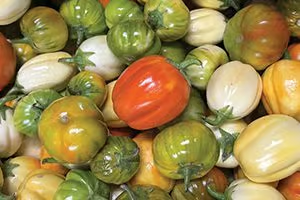
Traditionally, farmers have played a crucial role in supporting food banks through their generous donations. These contributions provide essential nourishment to those facing hunger and exemplify the farmers’ goodwill toward their community. However, it is important to recognize that, despite these benefits, farmers face the reality of losing the time, labor, and materials invested in growing food that ultimately goes unsold amid razor-thin margins. Today, while it is still critical that Second Harvest receives as much donated food as possible, we are working to make our relationship with farmers more equitable. We do this by purchasing more produce, dairy, eggs, and other fresh products from local providers such as Sassy Cow Creamery, Alsum Farms & Produce, and Elderberry Hills Farm (to name just a few). 34% of the over 9 million pounds of produce, dairy, and eggs that Second Harvest distributed last year were purchased.
Through our Farm to Foodbank Initiative, we set aside funds that are reserved for purchasing locally grown products. It is not just about supporting our neighbors facing hunger; it’s also about supporting Wisconsin farm families.
In addition to building and strengthening relationships with individual farm operations, Second Harvest purchases unsold produce from vendors at area farmers’ markets and delivers it directly to local food pantries. The result is the freshest locally-grown produce, potatoes, tomatoes, onions, and herbs possible, making it onto the tables of those facing hunger, many times within hours of leaving the market.
Recently, we’ve begun solidifying the connection between the farmer and Second Harvest before a crop is even planted. We collaborate with farmers during crop planning, securing commitments on the types of produce, timing, and price. In some cases, we even purchase the very seeds that will grow into the bounty our community enjoys. By working together in the crop planning stage, we are limiting uncertainty on both sides of the equation. Farmers know their efforts to grow the food will not be in vain, as the product will not go unsold, and food banks can confidently assure their network of food pantries that they will have access to locally grown, nourishing food.
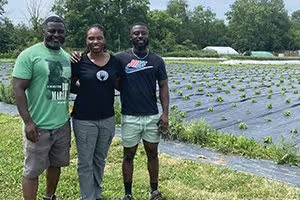
One farmer we work closely with recently shared the following:
“The upfront payment made it possible for us to buy packaging supplies/materials to prepare for the deliveries; it alleviates financial struggles. As a small-scale farmer, most of the time we are using our personal funds to pay for our farm business-related expenses and usually do not get reimbursed until our farm receives payment. The upfront payment made it possible for the farm to fund its own expenses.”
As you can see, the relationship between farmers and food banks has evolved into a mutually beneficial partnership whose true winners are the families and individuals who most need food assistance. It’s a testament to shared values, relentless hard work, and a steadfast commitment to ensuring that no harvest and no neighbor is left behind.
When healthy, locally grown food reaches a family’s table, everyone wins.
