
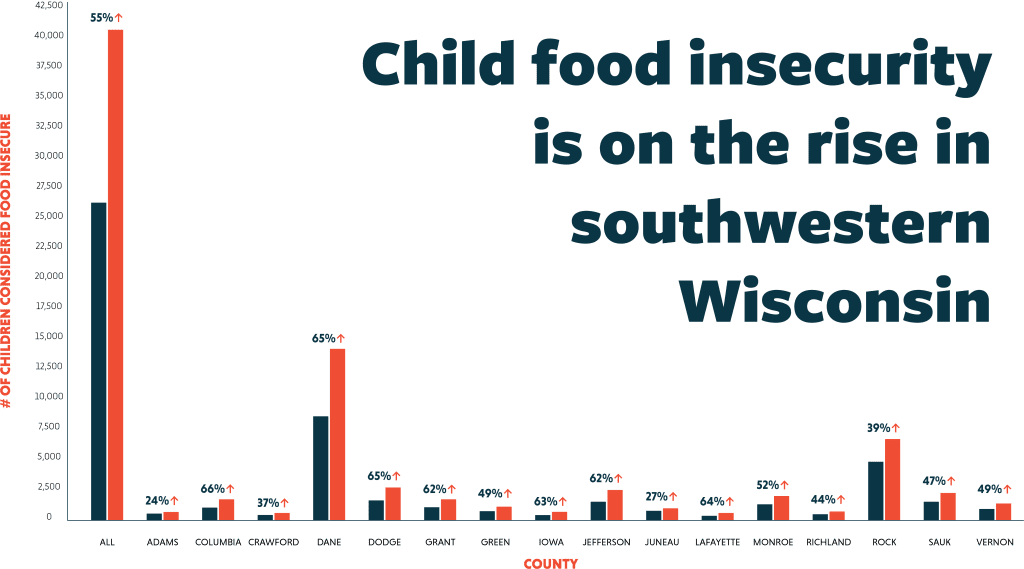
Recent data provided by Feeding America confirms a reality that food banks like Second Harvest and our local network of resource providers already knew based on the number of families seeking assistance every day: hunger is on the rise in southwestern Wisconsin. This unfortunate fact is particularly true for children under the age of 18 in our community.
As you can see in the chart below, the number of children considered food insecure has increased in every southwestern Wisconsin county supported by Second Harvest.
Causes of child food insecurity
There are many reasons why kids might not have enough to eat. Some of the common reasons include:

- Low family incomes: Although parents and caregivers work hard to provide for their children, low wages make it difficult to have enough money to buy food.
- Lack of affordable housing: Despite budgeting and saving, the high cost of housing can make it difficult for families with children to afford food and rent.
- Racism and discrimination: Black people, Latinos, and Native Americans are more likely to face barriers to getting food.
Effects of child hunger
Hunger can affect children’s health, development, and well-being. Some common effects include:

- Poor academic performance: Children who experience food insecurity may have trouble focusing and learning in school.
- Increased health problems: Kids who don’t get enough food to eat face higher risks of health conditions like anemia and asthma.
- Developmental differences: Hunger can change how a child’s brain and body grow and affect their thinking, learning, and behavior.
To ensure that everyone in our community – young or old – has enough nutritious food to thrive, it will take a community effort. Join us with your gift of funds, time, and by helping us raise awareness of hunger in our community. Together, we can nourish and transform our community.
