Opinion | Innovation key to meeting Wisconsin’s food security challenges

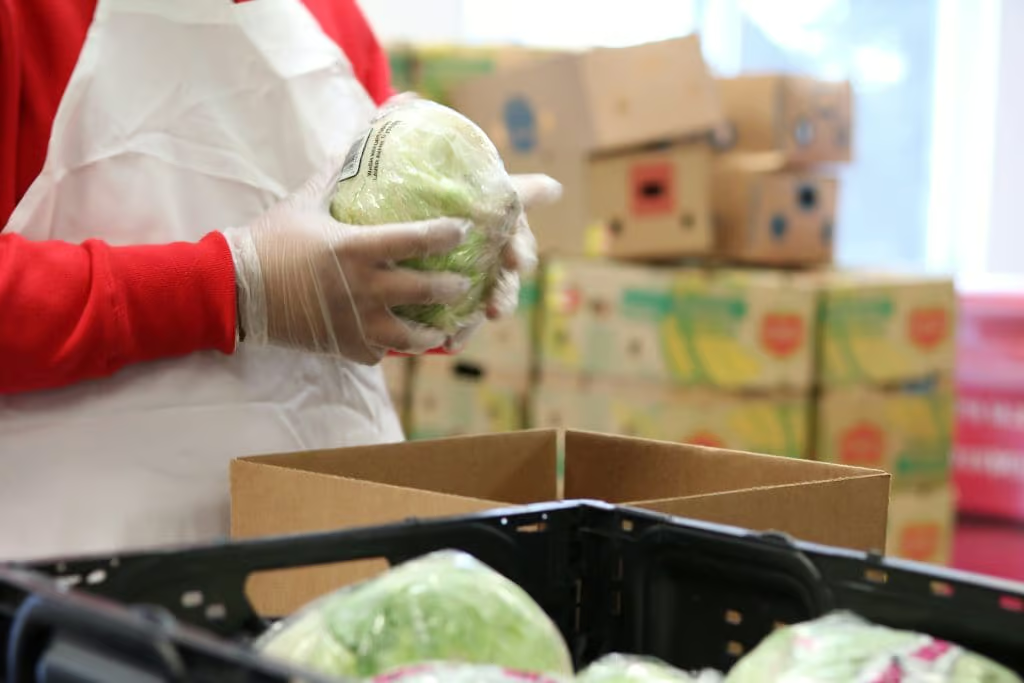
Person in red sweatshirt, apron, and gloves holding a cabbage. Crate of cabbages in the foreground, banana boxes in background.

By Michelle Orge, President/Executive Director of Second Harvest Foodbank of Southern Wisconsin.

In my 20 years in food banking, I have worked at organizations in three states serving communities not unlike those in southwestern Wisconsin. What I have learned is that we can’t keep doing things the way we used to, and we need to innovate how we provide support to our neighbors.

The need for our work and our advocacy remains critically important, but the manner in which we work towards eliminating hunger has evolved thanks to innovative and comprehensive ideas that are led by the neighbors, partners and the communities we serve. The solutions to ending nutrition insecurity start with community voice and are achieved with adaptive partners willing to innovate together.

The type of innovation I’m speaking of is possible in large part because Second Harvest Foodbank of Southern Wisconsin is much more than a distributor or warehouse. We are a community-based service organization collaborating with more than 300 food pantries, schools, after-school programs and other nonprofit organizations across a 16-county region.

In addition to providing food support, our partners’ work may also include providing housing support, individual and communitywide health care, and much, much more. Our role is to provide food, use our infrastructure and leverage our relationships, which allows our partners to focus their resources and capacity toward prioritized programming.

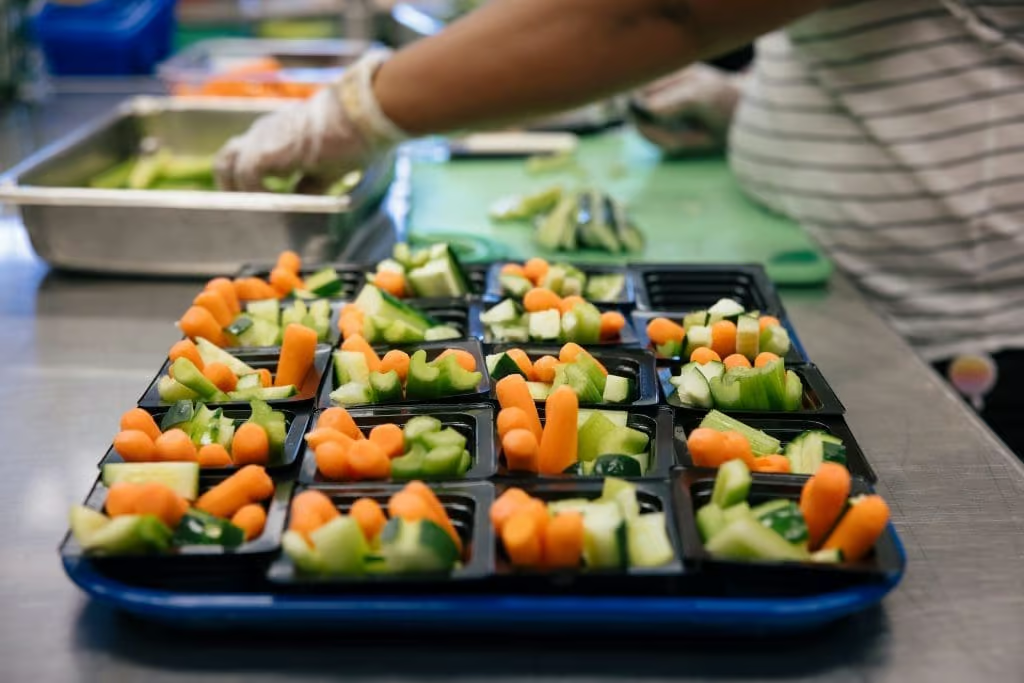
Look at our Farm to Foodbank Initiative, which is one of the largest programs of its kind in the country. It creates a vital connection between local farmers and food producers and families struggling with hunger in southwestern Wisconsin. The program gets more freshly harvested, nutritious food to those facing food insecurity, reduces our collective carbon footprint, and in 2022, the program generated $12 million in local economic activity. This is innovation that removes cost and accessibility barriers while advancing food equity, promoting sustainability and creating a consistent source of revenue for local farmers and food producers.

The program is a success because we have the partners, volunteers, farmers and community leaders across the region who recognize the importance of this innovation — and they continue to be ready to put this idea into action.

We’re innovating in other areas of the food ecosystem, too. Our robust food rescue program allows us to work directly with suppliers, distributors, farmers and retailers to safely recover surplus food for redistribution through our network of partners. Wisconsin’s Department of Natural Resources estimated that over 1.7 billion pounds of edible food ended up in landfills last year. We’ve been challenging that status quo by stepping in to ensure that when great food is still in its prime, we connect it to families through our mobile pantries and network of partners. Food rescue is valuable as a food resource to those who are facing nutrition insecurity, and it is good for the environment.

Today, the team at Second Harvest and I witness and adapt to change at a scale I’ve not experienced in the past 20 years. Changes in commodity prices, supply chain, legislative policy, federal grants, community need, affordable housing, public health and educational funding are continuously in motion. Yet all of these variables impact food insecurity in southwestern Wisconsin. That’s why we innovate. Innovation — new ideas that close the gaps — allows us to remain flexible, adapting to the changes that are out of our control.

I don’t know what food banking will look like in another 20 years. What I do know is that we’re going to keep seeking out new answers with community voices driving innovation. If there is an opportunity to support our partners more efficiently, we’re going to explore it. If our community tells us we can meet their need more effectively, we’re going to listen.


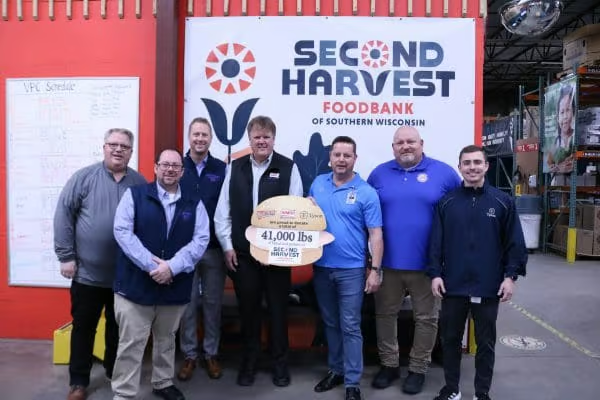
Organizations teamed up to donate 15,000 pounds of food to Second Harvest Foodbank of Southern Wisconsin

MADISON, WI, December 8, 2023 – For the seventh year in a row, Walmart, Bimbo Bakeries USA and Tyson Foods have joined forces to help end hunger across the United States.

The three companies donated 15,000 pounds of food – equating to 12,500 meals – to Second Harvest Foodbank of Southern Wisconsin through a partnership with Feeding America. Millions of Americans are facing lost or reduced food benefits this year, and Feeding America foodbanks – like Second Harvest Foodbank of Southern Wisconsin – are struggling to keep up with demand.

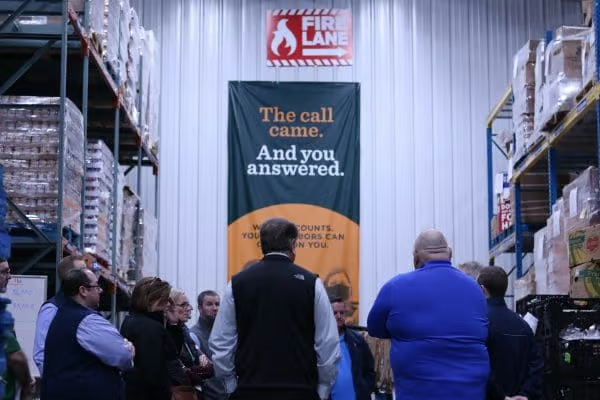
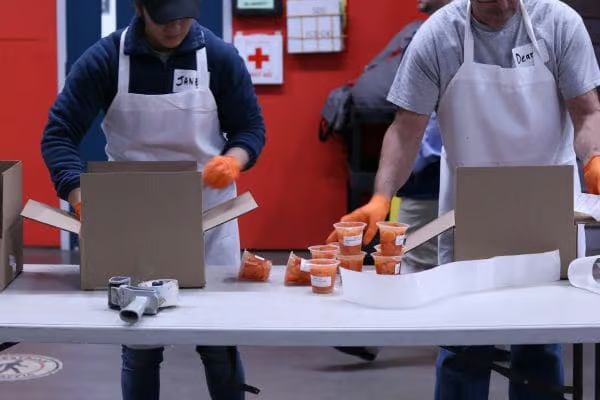
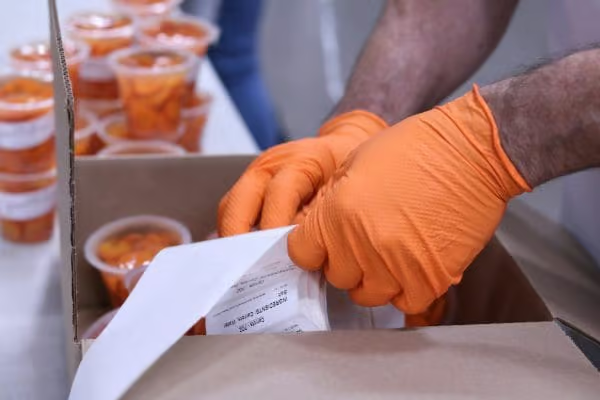
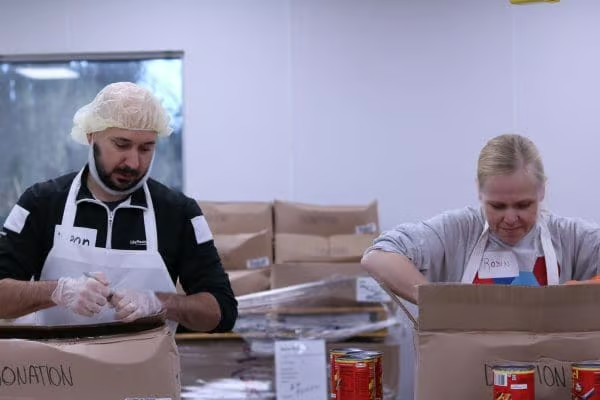
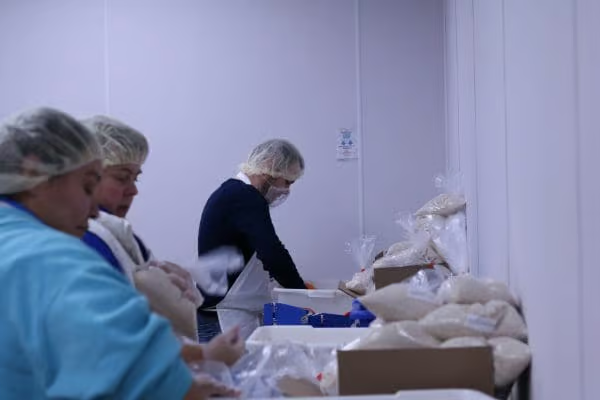
Representatives from each of the organizations visited Second Harvest Foodbank of Southern Wisconsin today to volunteer, deliver the donation and tour the facility. As part of this partnership, Walmart, Bimbo Bakeries USA and Tyson Foods donated 5,000 pounds of bread and 10,000 pounds of protein that will be given to individuals and families over the coming weeks.

“We are so thankful to our corporate partners for this generous donation,” said Michelle Orge, President and CEO of Second Harvest Foodbank of Southern Wisconsin. “The end of pandemic-related food benefits and economic downturn has caused extra difficulties for families, many of whom never thought they’d be in these situations.”

Since 1986, the organization has provided nearly 241 million meals to communities across 16 counties. Through its core services of food acquisition & storage, food distribution, and FoodShare Outreach, Second Harvest Foodbank of Southern Wisconsin provides those facing hunger access to enough nutritious food to thrive.

Through its partnerships and individual donations, Feeding America – the largest domestic hunger relief organization in the United States – provides food to millions of Americans through a network of 200 member food banks, including Second Harvest Foodbank of Southern Wisconsin, and 60,000 partner agencies nationwide.

About Bimbo Bakeries USA

Bimbo Bakeries USA (BBU) is a leader in the baking industry, known for its category leading brands, innovative products, freshness and quality. Our team of 20,000 U.S. associates operates more than 50 manufacturing locations in the United States. Over 11,000 distribution routes deliver our leading brands such as Arnold®, Artesano®, Ball Park®, Bimbo®, Boboli®, Brownberry®, Entenmann’s®, Little Bites®, Marinela®, Mrs Bairds®, Oroweat®, Sara Lee®, Stroehmann®, and Thomas’®. Bimbo Bakeries USA is owned by Mexico’s Grupo Bimbo, S.A.B de C.V., the world’s largest baking company with operations in 34 countries.

About Feeding America

Feeding America® is the largest hunger-relief organization in the United States. Through a network of more than 200 food banks, 21 statewide food bank associations, and over 60,000 partner agencies, food pantries and meal programs, we helped provide 5.2 billion meals to tens of millions of people in need last year. Feeding America also supports programs that prevent food waste and improve food security among the people we serve; brings attention to the social and systemic barriers that contribute to food insecurity in our nation; and advocates for legislation that protects people from going hungry. Visit www.feedingamerica.org, find us on Facebook or follow us on Twitter.

About Tyson Foods

Tyson Foods, Inc. (NYSE: TSN) is one of the world’s largest food companies and a recognized leader in protein. Founded in 1935 by John W. Tyson and grown under four generations of family leadership, the Company has a broad portfolio of products and brands like Tyson®, Jimmy Dean®, Hillshire Farm®, Ball Park®, Wright®, Aidells®, ibp® and State Fair®. Tyson Foods innovates continually to make protein more sustainable and affordable to meet customers’ needs worldwide and raise the world’s expectations for how much good food can do. Headquartered in Springdale, Arkansas, the Company had approximately 142,000 team members on October 1, 2022. Through its Core Values, Tyson Foods strives to operate with integrity, create value for its shareholders, customers, communities and team members and serve as a steward of the animals, land and environment entrusted to it. Visit www.tysonfoods.com.

About Second Harvest Foodbank of Southern Wisconsin

Second Harvest Foodbank of Southern Wisconsin began working with local hunger-relief agencies in 1986. It helps end hunger in 16 southwestern Wisconsin counties through food distribution to its partner agencies, promotion of outside food assistance programs like FoodShare, and raising awareness of hunger. As southwestern Wisconsin’s largest hunger-relief charity it meets nearly one million requests for help each year. From July 1, 2022, to June 30, 2023 Second Harvest, together with its partner agencies and programs, provided 19.7 million meals. It is one of 200 members of Feeding America, the nation’s leading domestic hunger-relief charity. To learn more, visit www.secondharvestsw.org/, find us on Facebook or follow us on Instagram.

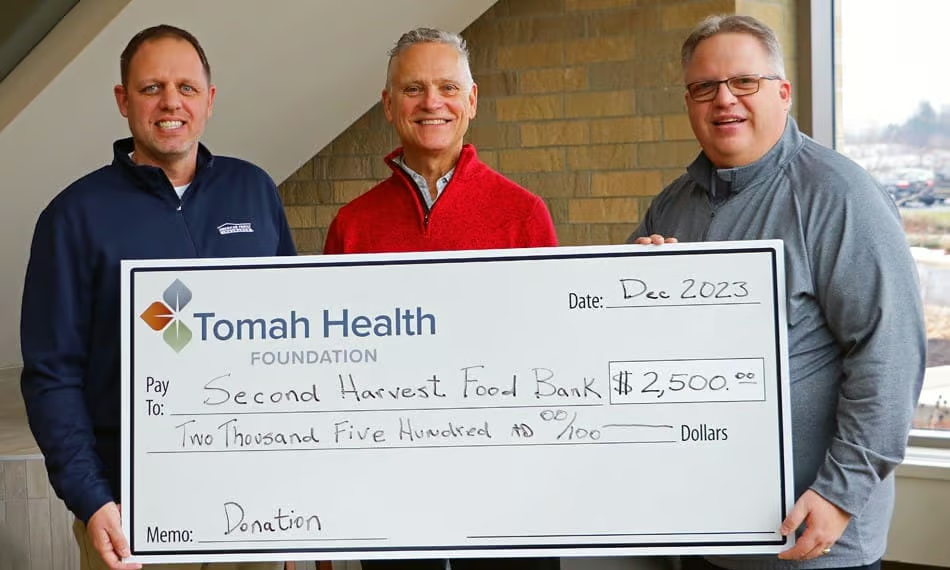
 Tomah Health Community Foundation vice president Jeremy Haldeman (left), and Foundation president Brian Eirschele (center), presented a ceremonial check to Second Harvest Foodbank of Southern Wisconsin media and public relations manager Kris Tazelaar on December 5th, 2023.

TOMAH, WI, December 6th, 2023 – The Tomah Health Community Foundation is helping get healthy food to struggling families in Monroe County. Foundation officials donated $2,500 to the Second Harvest Foodbank’s FoodShare Wisconsin program during an event at Tomah Health Dec. 5.

“Food is such an important part of our lives, good food in particular,” foundation president Brian Eirschele said of the donation. “There’s a need for good food, which is essential to good diets and good health. We’re just fortunate that Second Harvest has people who are interested in taking care of us.”

Second Harvest Foodbank of Southern Wisconsin media and public relations manager Kris Tazelaar said the foundation’s donation will support the Foodbank’s FoodShare program. “The way that Second Harvest works in 16 counties here in southwestern Wisconsin is through the generosity of groups just like the Tomah Health Foundation,” said Tazelaar. “They are making a huge difference in the Monroe County community and through Second Harvest we are able to provide much needed food to those families who are struggling with hunger right here in our community.”

It is the 10th year that the Foundation has supported Second Harvest. “We are just incredibly grateful for our long-standing relationship with the Tomah Health Community Foundation, and together we are really making a difference,” said Tazelaar.

Formerly known as food stamps, Second Harvest Foodbank’s FoodShare program allows eligible residents to receive a debit card that is loaded with FoodShare benefits that can be used at most grocery stores.

“Our FoodShare outreach is going to help folks understand what the program is, what are some of the eligibility requirements and what are some of the benefits that they could expect if they were to apply,” explained Tazelaar. “Most importantly, it actually helps people actually apply for the program because until they apply, they can’t get some of those benefits that can really make a difference in their lives.”

He added that while the FoodShare program helps ensure potentially eligible participants learn how to obtain benefits; it also meets community needs. In fiscal year 2023, Second Harvest assisted with the submission of 38 FoodShare Wisconsin applications in Monroe County, which generated 19,156 meals for food insecure Monroe County residents. The program also created $102,659 in economic impact in Monroe County.

“FoodShare numbers and application numbers, obviously fluctuate from year to year and they’re a little bit down now. But I think that’s for a lot of reasons,” said Tazelaar. “It’s a matter of us being able to get out there and reach more people to let them know about the benefits and let them know about the application process. The more people we can talk to, the more people will understand the benefits of the program.”

Second Harvest serves residents in Adams, Columbia, Crawford, Dane, Dodge, Grant, Green, Iowa, Jefferson, Juneau, Lafayette, Monroe, Richland, Rock, Sauk and Vernon counties. Residents can learn if they are eligible for the program by visiting GetAQuestCard.org or by calling the FoodShare Help Line at 1-877-366-3635.

“There’s no shame in asking for help and FoodShare can make such a huge difference in the lives of those who do use it to really make ends meet,” said Tazelaar. “The true long-term goal is to end hunger.”

To learn more, visit https://www.secondharvestmadison.org/foodshare-program/.